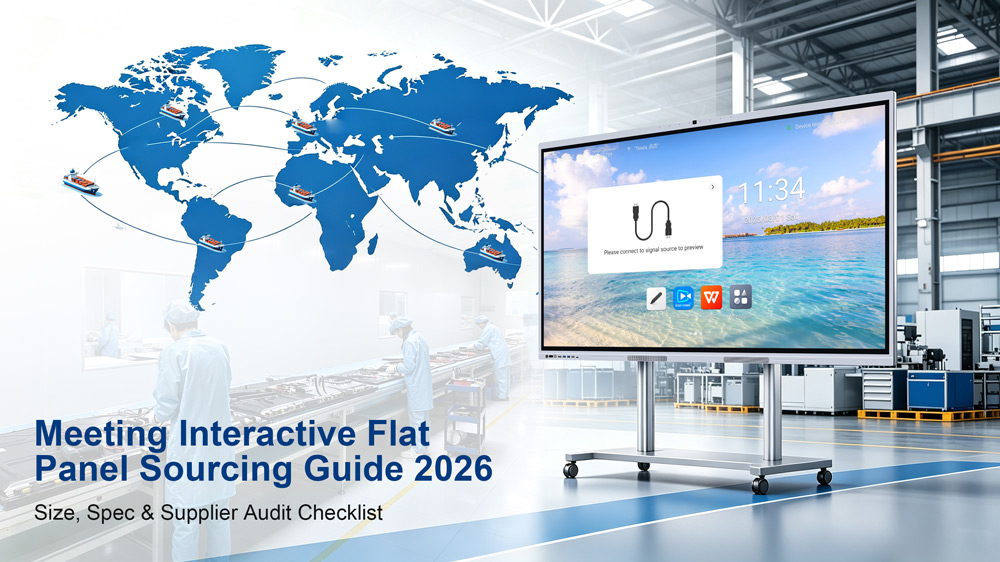
1. Size Matching: Match Screen Inch to Meeting Room Capacity
Size selection directly impacts viewing experience and FOB cost; avoid blind pursuit of ultra-large screens. Standard mainstream sizes: 65”,75”,86”,98”,110”.
· 65-inch: Small meeting room (≤8 people, room depth ≤4m). Ideal for startup offices, branch mini-conference rooms, overseas small enterprise projects
· 75-inch: Mid-small conference room (8–15 people). Balanced cost and vision, the most bulk-ordered model for global resellers
· 86-inch: Standard enterprise meeting room (15–30 people). Suitable for corporate headquarters, multi-branch training classrooms
· 98/110-inch: Large training hall, multi-party remote conference center, group headquarters multi-functional space
Key viewing distance rule: Minimum viewing distance = screen inch × 2.5; maximum viewing distance = screen inch × 5. All export models support landscape wall mounting and mobile trolley stand matching.
2. Core Hardware Spec Baseline for Export-Grade Conference IFP
Skip overhyped marketing parameters, focus on 5 non-negotiable commercial standards:
1. Touch Technology: Zero optical full lamination, ≤20ms writing lag, ≥20-point infrared capacitive touch. Avoid cheap single-layer laminated panels with severe side glare, which cause overseas customer return complaints. AG anti-glare tempered glass is mandatory for all export units.
2. Display: A+ commercial 4K UHD panel, ≥400 nits brightness, 178° ultra-wide viewing angle. Consumer TV panels are not acceptable for conference use—they cannot sustain 12+ hours daily operation.
3. Audio & Video Conference Module: Built-in 4K wide-angle camera with auto speaker tracking, 8–12m array noise-cancelling microphones, 2.1-channel stereo speakers. Pre-test compatibility with Zoom, Microsoft Teams, Google Meet for North America/EU clients.
4..Connectivity: Reserved full-function USB-C, dual HDMI input, Gigabit Ethernet, Wi-Fi 6, multi-device simultaneous wireless split-screen casting (3+ devices without lag). Sufficient interfaces avoid post-delivery hardware upgrade costs for buyers.
3. Supplier 4-Point Audit for Import Buyers
Before placing mass orders, verify manufacturers with these checks to avoid trading companies rebranding generic goods:
1. Production Qualification: Own SMT workshop, touch lamination production line, independent aging test room. Request factory audit video and monthly shipment capacity data.
2. Global Certification Support: Pre-apply FCC, CE, RoHS, Google EDLA for North America/EU shipments; domestic 3C for local distribution. Uncertified panels lead to customs detention and fines.
3. OEM/ODM Customization Capacity: Support logo silk printing, startup wallpaper customization, pre-install regional language firmware, tailored CMS whiteboard software.
4. After-sales Policy: Minimum 3-year commercial warranty, export shockproof wooden case packaging, spare parts supply cycle within 7 working days for overseas dealers.
4. 2026 FOB China Price Reference (Standard Configuration)
· 65” Single Android: $680–$950
· 75” Dual System OPS: $1,250–$1,680
· 86” Dual System Full Conference Module: $2,100–$2,750
· 98” Flagship AI Conference IFP: $4,200–$5,100
Price fluctuation factors: Touch lamination grade, camera audio configuration, OEM custom quantity, container order bulk discount.
Final Sourcing Tip
Conference IFP is a long-cycle commercial hardware asset. Prioritize stable quality and full certification rather than ultra-low quotations from unknown small factories. A slight unit price cut often brings high after-sales repair, return and customs compliance costs in overseas markets.